- Scoiattolo rosso
Natural, artisanal honey, made by people who truly care for bees.
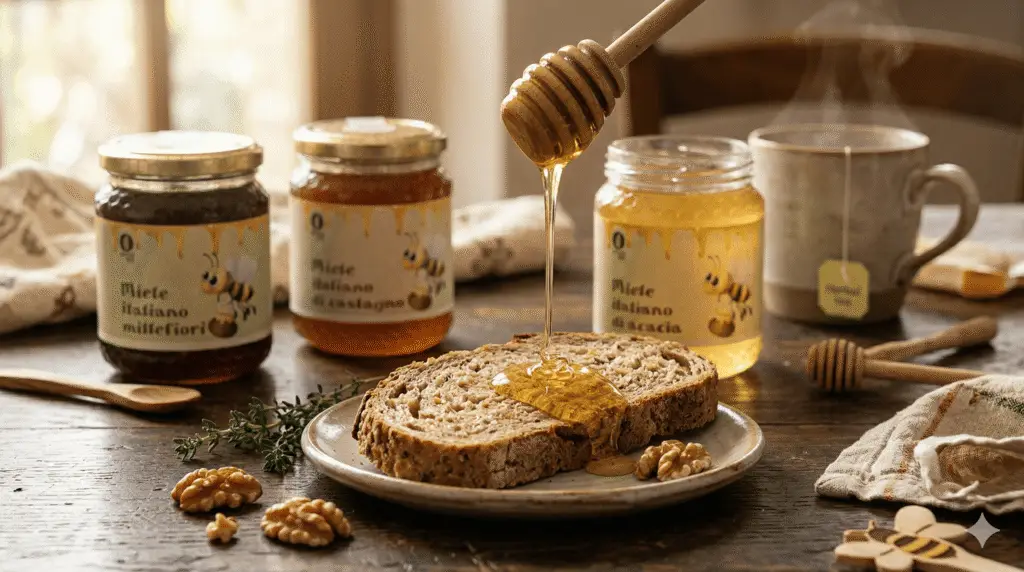
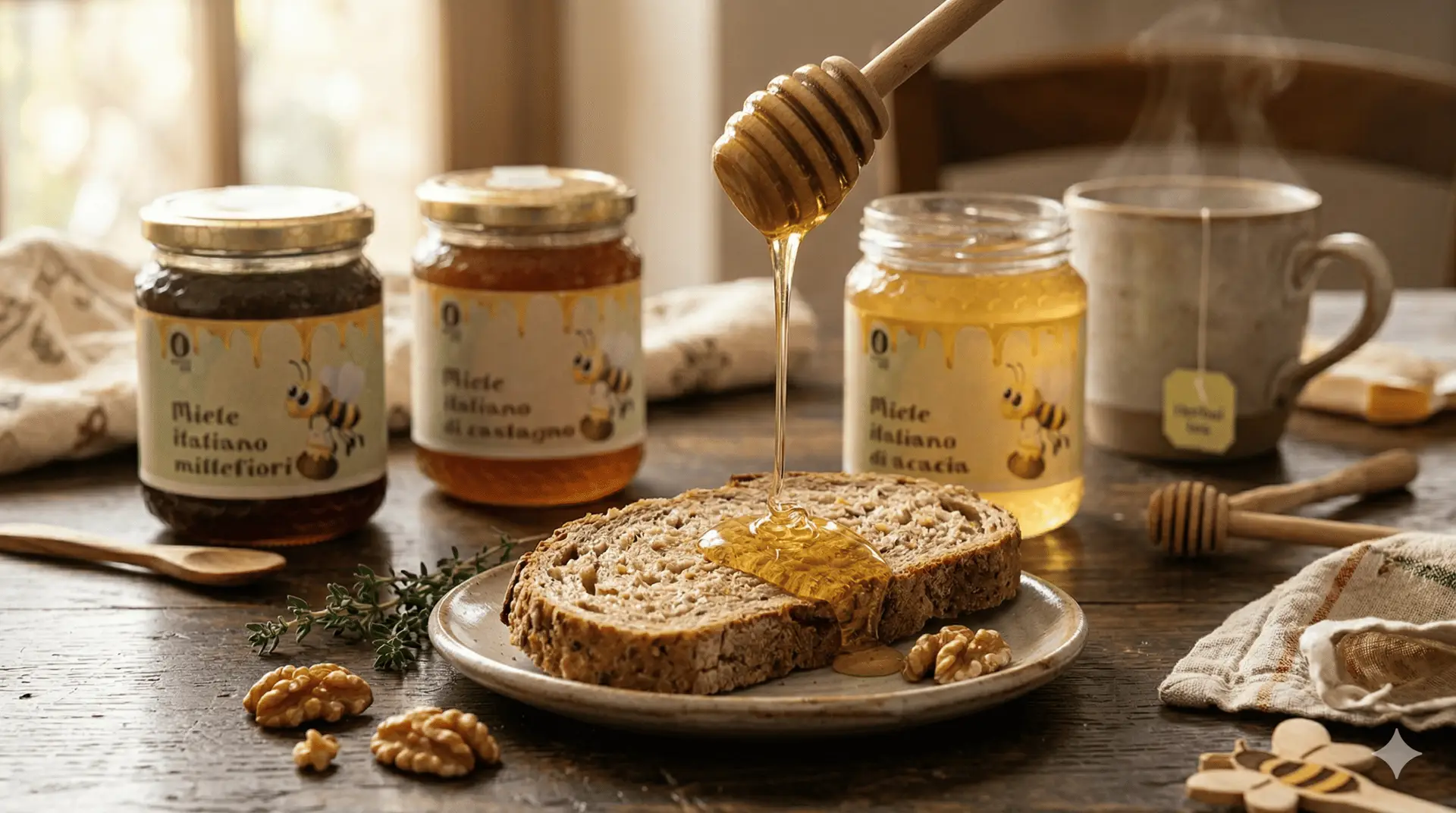
Since 2015, we have been caring for our bees in the hills and mountains near Carrù, in the province of Cuneo. We produce natural Italian honey in three varieties: wildflower, acacia, and chestnut, always respecting the hive and the rhythms of nature.
- Natural honey
We started out of curiosity. We carried on out of love.
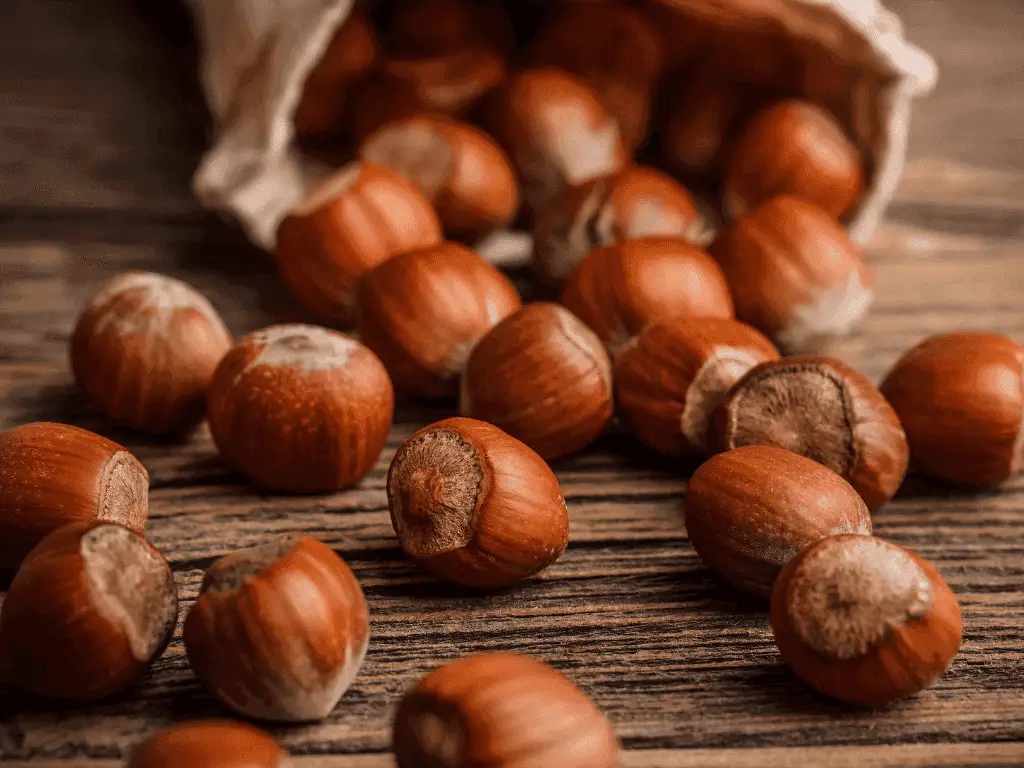
After 75 years of growing Piedmont Hazelnuts PGI, we began a new journey in 2015: beekeeping. It started with a genuine curiosity about these extraordinary insects and grew from our love for everything they allow us to do for the land and its biodiversity.
At first, we had only a few hives, production was limited, and nearly all the honey was kept for our family. Then, season after season, we learned to understand the bees better: their rhythms, their needs, and the signs that tell us how they are doing. As our experience grew, so did production—always in harmony with nature’s timing.
Today, we produce three varieties of natural Italian honey: wildflower, acacia, also known as black locust, and chestnut. Every jar is the result of that initial curiosity, which over time has become an essential part of who we are and what we love to do.
Three varieties of natural Italian honey. Each with its own distinctive character.
Every honey reflects the land where it is harvested: its flowers, trees, and microclimate. Discover the three Scoiattolo Rosso varieties and find your favourite.
Acacia or Black Locust Honey
Simple and delicate.
The lightest and most fluid of the three. Almost transparent, with a pale straw-yellow colour, a clean sweetness, and subtle floral notes. It crystallises slowly, making it easy to use even long after opening. Ideal for anyone trying artisanal honey for the first time, and for sweetening without overpowering other flavours in the kitchen.
Sweeten your day →
Dark Wildflower Honey
Eclectic and unpredictable.
A honey full of complexity, changing every year depending on the flowers foraged by our bees. It has a deep amber colour, a rich aroma, and a flavour that can range from floral to slightly herbaceous. Each season tells a different story of our land. Delicious on its own, spread over warm bread, stirred into tea, or used as a natural sweetener in recipes.
Let yourself be surprised →
Chestnut Honey
Bold and full of character.
An unmistakable honey, with a deep brown colour, a thick texture, and an intense aroma followed by toasted notes. It is not for everyone—and to us, that is a good sign of authenticity.
Excellent with aged cheeses, game, red meat, or in an evening herbal tea. Rich in beneficial properties known since ancient times.
Discover this natural remedy →
What Happens Inside a Beehive
Every beehive is a world of its own. It can contain anywhere from 30,000 to 80,000 insects, organised within a precise social structure: worker bees, which make up almost the entire colony, a small number of drones—the males—and a single queen bee.
Worker bees are females rendered sterile by the queen’s pheromones. They do everything: collect nectar, produce honey, defend the hive, and feed the larvae. They have highly developed eyesight to locate flowers and plants, and on their hind legs they carry the corbicula, a kind of pollen basket fitted with tiny hairs, where they collect and transport pollen grains and propolis. If you have ever seen a bee returning to the hive with two yellow balls on its legs, that is what they were.
Caring for these insects means learning to read their signals: understanding when a colony is healthy, when it needs more space, and when it is under stress. You do not control a hive—you adapt to it. That is one of the first lessons beekeeping taught us.
We Care About Bees and Biodiversity
Bees are sentinels of the ecosystem. The health of an apiary reflects the health of the surrounding land. That is why we rely exclusively on sustainable farming methods certified under the SQNPI standard, with no glyphosate, herbicides, or insecticides.
Our Insights into Bees and Honey
From why honey never expires to how to use it in the kitchen, from fascinating facts about bees to sweet and savoury recipes: on our blog, you will find articles and resources written by people who care for bees every day.
The new harvest 2026 of Piedmont pgi hazelnut has been available since October. Visit the shop! Like every year, after harvesting in the Scoiattolo Rosso company, the hazelnuts are cleaned of impurities (stones, spoiled hazelnuts, pebbles of earth) and left to dry in the sun in our warehouse. For this
1 : Preserving of hazelnuts Italian hazelnuts, including the Piedmont PGI hazelnuts, are one of the most popular varieties of dried fruit, not only for their delicious flavor but also for their multiple nutritional benefits. However, to preserve the freshness and quality of shelled and roasted hazelnuts, it is essential
Tasty and genuine, hazelnuts are an ingredient to integrate into your diet, for savory or sweet dishes or simply as a snack. This is because the benefits of hazelnuts on our body are truly numerous. In this article, we will explore why the Piedmont PGI hazelnut, which we also grow
- THE FARM
Why Choose Scoiattolo Rosso
Three varieties of honey, thousands of bees, and a family that has cared for them for over 10 years.
We ship throughout Italy directly from Carrù.
Know What You’re Eating
We produce in small batches using just a few simple ingredients, with no artificial additives or preservatives. We oversee every stage of production—from our hands to yours.
Only Natural Methods
We use only natural and biological treatment and pest-control methods, with no glyphosate-based herbicides or chemical insecticides, to protect the environment and preserve the genuine quality of our products.
We Are Just as You See Us
Human, authentic, and approachable. We believe in replying personally, rather than entrusting our presence to bots or artificial intelligence.
Virtuous Economy
You support a thriving local and circular economy—one built on respect for nature and tradition, recycling, sustainable innovation, and new job opportunities for younger generations.